Part 3 of 6 in the allergic rhinitis series. Part 1 is what allergic rhinitis is and what histamine does; part 2 is how TCM reads the nose; part 4 is air-conditioning and haze; part 5 is when to see a doctor first; part 6 is what an online consultation does.
"So what can I do at home?" Once the what and the why are covered, that is the next question.
This part is the measures at home: what temperature to wash bedding at, what to do about dust, and how to rinse the nose. Each measure says whose it is.
The short version
- Synthetic bedding and covers, washed regularly at 60C and above — the NHS. HealthHub says hot water at 55-60 °C is to remove dust mites.
- Dust-mite-proof covers on mattresses, pillows and bolsters; remove rugs or carpets, minimise items on the bed — those are HealthHub's.
- Dust with a damp cloth, use a vacuum with a HEPA filter, keep the home dry and well-ventilated, and no pets in bedrooms — those are the NHS's.
- The rinse, the NHS's method: boil a pint of water and let it cool, add 1 teaspoon of salt and 1 teaspoon of bicarbonate of soda, up to 3 times a day, a new solution each time. Boiled, cooled, fresh.
- All of it is aimed at one step: less contact with the allergen. One table at the end sets five common situations side by side.
First, the things that cannot wait
Difficulty breathing, wheezing, speaking in short phrases, or blue lips — call 999 now, or go to the nearest hospital emergency department.
A nosebleed lasting longer than 10 to 15 minutes, or bleeding that seems excessive — the NHS nosebleed page puts this one in A&E. Call 999 now, or go to the nearest hospital emergency department.
Persistent one-sided blockage, repeated nosebleeds, or blood-streaked discharge — have a doctor establish the cause first; do not treat it as allergic rhinitis yourself. The full list is in part 5.
⚠️ A safety note: TCM and Western medicine complement each other; it is not a choice between them. If you are under medical treatment, TCM care is a layer added on top — not a layer swapped in.
A note: this section is general information only. For conditions like these, follow your doctor's diagnosis and treatment, and seek medical attention when you need it.
I. At home: bringing the exposure down
Start with the bedroom.
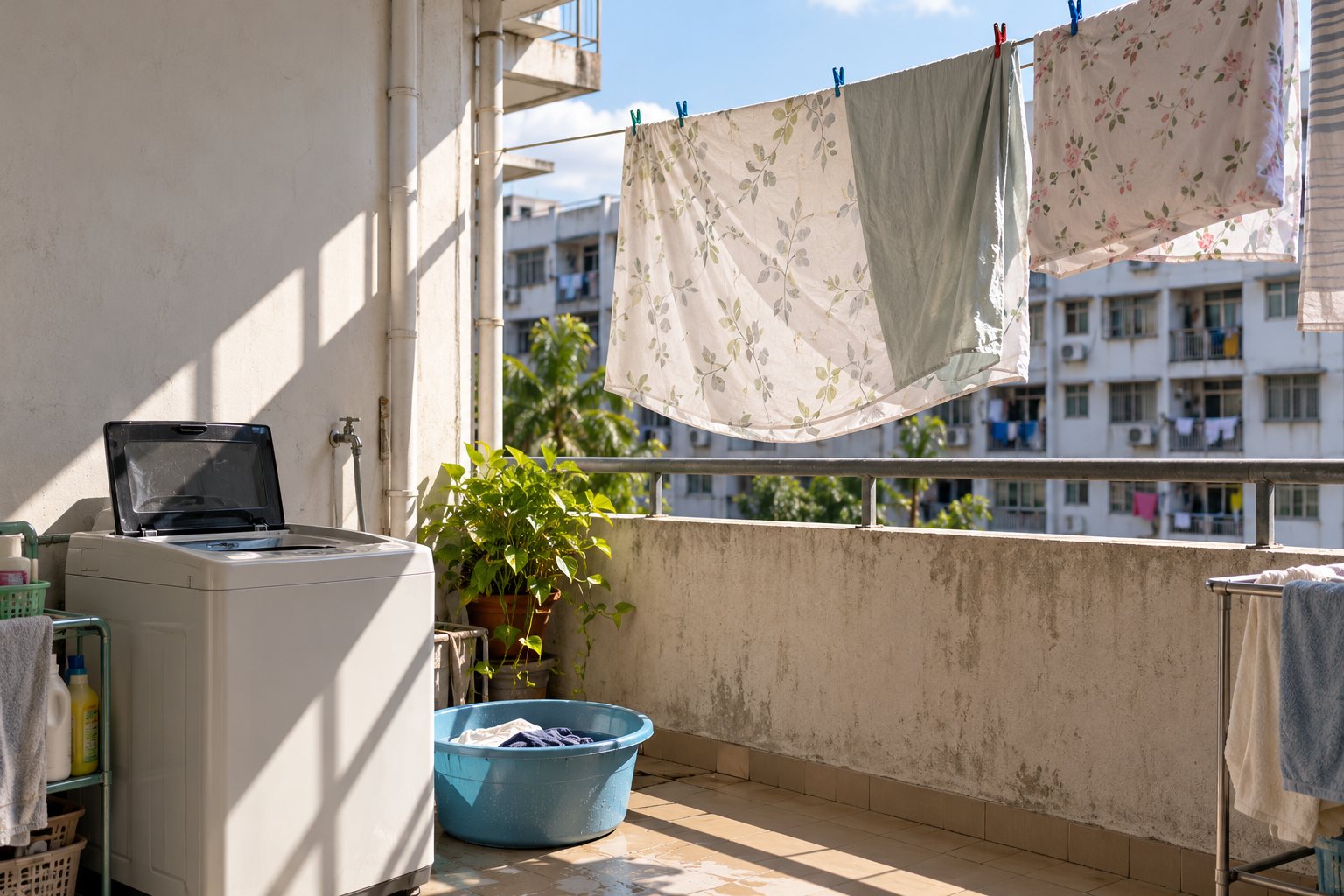
Bedding. The NHS advice is synthetic bedding and covers, "wash bedding regularly at 60C and above". HealthHub gives the purpose: wash bedding with hot water at "55-60 °C" frequently "to remove dust mites", and encase mattresses, pillows and bolsters in dust-mite-proof covers.
Why the number is 60, neither page explains; this article gives only the temperature and the purpose.
Dust, and how much stuff. Dust with a damp cloth and use a vacuum with a HEPA filter, says the NHS. HealthHub says to vacuum and mop frequently to get rid of the dust mites and insect droppings, and to remove rugs or carpets and minimise items on the bed — stuffed toys, cushions — because they may collect dust. No need to throw everything out.
The house itself. Keep it dry and well-ventilated, deal with any damp and condensation, and do not allow pets in bedrooms. Both are on the same NHS page. There is sun every day here and sunning the bedding is a habit, but the sourced measure is the wash temperature, not the sun.
💡 Remember: all of these are aimed at one step — less contact with the allergen, the start of part 1's chain.
II. How to rinse the nose
The NHS lists salt water sprays or solutions among what a pharmacist can advise, and sets the method out precisely: boil a pint of water and leave it to cool; mix in 1 teaspoon of salt and 1 teaspoon of bicarbonate of soda; wash your hands. Then, over a sink, pour a little into a cupped palm and sniff it into 1 nostril at a time, breathing through your mouth and letting the water run back into the sink; up to 3 times a day, making a new solution each time. A pint is around 570ml — that conversion is on the NHS sinusitis page.
The point is boiled, cooled, fresh each time. Never tap water as it comes, and not yesterday's batch.
It is a general measure, not a substitute for a diagnosis. If pharmacy treatments are not working, the NHS says see a doctor.
III. One table: five common situations
| Situation | What TCM theory says | Usual practice | When to see a doctor first |
|---|---|---|---|
| Sneezing and clear discharge the moment you wake | The lung opens into the nose; the lung dislikes cold; the theory holds that the early morning is cool and wind-cold enters easily through the nose | Warm the nose and neck on waking, a warm drink (the theory's direction); bedding at 60C and above, which HealthHub says is to remove dust mites; dust-mite-proof covers | Symptoms getting worse, affecting sleep and everyday life, or pharmacy treatments not working: the NHS says see a doctor |
| Blocked the moment you enter an air-conditioned room | The lung dislikes cold; the theory holds that a cold draught on the nose and mouth chills lung qi first | Vent away from your face, a thin jacket handy (the theory's direction); the NHS lists very hot or cold temperatures and humidity among causes of non-allergic rhinitis. Air-conditioning and the car in detail: part 4 | Not sure what is causing it: the NHS says see a doctor |
| Dry, itchy nose and more sneezing in haze weeks | The lung opens into the nose; the theory holds that unclean air enters the lung through the nose first | Check the Air Pollutant Index (API); the MOH says the high-risk group wears a mask outdoors at 101 to 200 and everyone does at 201 to 300. Which mask, and how the API is calculated: part 4 | People with health problems: the MOH says see a doctor at 201 to 300; difficulty breathing or wheezing means call 999 now, or go to the nearest hospital emergency department |
| Constant clear discharge, itchy eyes | The fluid of the lung is nasal discharge; the theory holds that when the lung takes wind-cold, the discharge runs clear and copious | Avoid your allergens as far as you can; rinse the nose; no pets in the bedroom (the NHS); remove rugs or carpets (HealthHub) | Blood-streaked discharge, a reduced sense of smell, a persistent fever — see part 5 |
| One-sided blockage, repeated nosebleeds | This row has no theory line: a Western doctor establishes the cause first | For a nosebleed, sit and lean forward, pinch the nose just above the nostrils for 10 to 15 minutes, breathe through your mouth (the NHS) | Regular nosebleeds: the NHS says see a doctor; a nosebleed lasting longer than 10 to 15 minutes or bleeding that seems excessive means call 999 now, or go to the nearest hospital emergency department |
In the table, "see a doctor" means a Klinik Kesihatan or clinic visit; the "call 999 now" situations do not wait for a clinic.
The "what TCM theory says" column is how the theory explains it, not a judgement about you. One-clause meanings for the second column's terms are below; the full account is in part 2.
💡 Remember: the fourth column lists situations that get mixed up with "allergic rhinitis" and should be ruled out by a Western doctor first. Rule out first, then adjust.
The words in this part
- House dust mite (尘螨) — one of the NHS's common allergies; HealthHub says washing bedding at 55-60 °C is to remove it.
- Dust-mite-proof cover (防尘螨套) — HealthHub's recommendation: encase mattresses, pillows and bolsters.
- The lung opens into the nose (肺开窍于鼻) — the World Health Organization's TCM terminology standard, verbatim: "The nose is the opening of the lung."
- The lung dislikes cold (肺恶寒) — same standard: intolerant of cold, connected with the skin and body hair, its qi easily damaged by exogenous pathogenic cold.
- The fluid of the lung is nasal discharge (肺在液为涕) — same standard: "Nasal discharge is associated with the lung."
Frequently asked
Does rinsing the nose help? The NHS lists salt water sprays or solutions among what a pharmacist can advise; the method is in section II above. It is a general measure, not a substitute for a diagnosis; if pharmacy treatments are not working, see a doctor.
The other five parts
- Part 1: How allergic rhinitis happens, and what histamine does
- Part 2: How TCM reads the nose, and the "surface"
- Part 4: Air-conditioning, haze, masks and the pharmacy
- Part 5: When to see a doctor first
- Part 6: What an online consultation does
👉 If you are not sure which of these measures mean anything for your kind of nose, you are welcome to book an online consultation with HansMed, where a practitioner registered under the T&CM Act 2016 can assess it with you; if anything in "First, the things that cannot wait" above or in part 5 applies, see a doctor first.
Sit with a licensed TCM practitioner from wherever you are.
HansMed Modern TCM
For general wellness education only — not medical advice. Consult a registered TCM practitioner for personal guidance.
Sources
- NHS, Allergic rhinitis, page last reviewed 08 January 2026 — https://www.nhs.uk/conditions/allergic-rhinitis/
- NHS, Sinusitis (sinus infection), page last reviewed 31 January 2024 — https://www.nhs.uk/conditions/sinusitis-sinus-infection/
- NHS, Nosebleed, page last reviewed 05 December 2023 — https://www.nhs.uk/conditions/nosebleed/
- Singapore MOH HealthHub, Allergic Rhinitis, article last reviewed 24 July 2026 — https://www.healthhub.sg/health-conditions/allergic-rhinitis
- Kementerian Kesihatan Malaysia, Langkah-Langkah Pencegahan Semasa Jerebu, last updated 29 September 2025 — https://www.moh.gov.my/teras/info-kesihatan/jerebu/artikel-dan-panduan-pengguna-berkaitan-jerebu/langkah-langkah-pencegahan-semasa-jerebu
- World Health Organization, WHO international standard terminologies on traditional Chinese medicine, 2022 — https://www.who.int/publications/i/item/9789240042322