Part 1 of 6 in the "what is cupping" series. Part 2 is what actually happens in one session; part 3 is how cup retention, sliding cupping and wet cupping differ; part 4 is what the marks are and how long they last; part 5 is which situations to tell your practitioner about; part 6 is aftercare.
"What does cupping actually do? Does a darker mark mean my body is in worse shape?" A question that comes up often is this one, and it is what people searching for "cupping" usually want answered too.
The short answer first. Cupping is a TCM external therapy that uses a cup to create negative pressure on the skin and draw the skin up into it.
The Hong Kong Department of Health's Chinese Medicine Regulatory Office describes it as using a cup as the tool, removing the air inside by burning or other means to form a vacuum, so that the cup attaches to a specific part of the body or an acupoint on the skin.
This part answers only the first question: what it is.
The short version
- Cupping sits within the broad "acupuncture therapies" group — that is the Hong Kong regulator's grouping. Of the four methods, the one that uses a needle is wet cupping.
- Cupping is defined in the World Health Organization's 2022 standard terminology for TCM: consume the air inside the cup to create negative pressure, then place the cup on the skin over the selected area.
- The same Hong Kong page lists four methods: fire cupping, flash cupping, sliding cupping and wet cupping. The flameless suction cup is also common now.
- What TCM theory says and what physically happens in the skin are two different questions. This part keeps the two accounts apart.
First, the things that cannot wait
If burns, blisters, broken skin, severe pain, or signs of infection develop at the cupping site, please contact your practitioner. If you experience fever, dizziness, or difficulty breathing, call 999 now, or go to the nearest hospital emergency department.
If you are experiencing seizures, loss of consciousness, or high fever, call 999 now, or go to the nearest hospital emergency department, rather than considering cupping.
The full list, and the reason for each, are in part 5. TCM and Western medicine complement each other; it is not a choice between them.
A note: this section is general information only. For conditions like these, follow your doctor's diagnosis and treatment, and seek medical attention when you need it.
I. Negative pressure: where cupping sits, and how it is defined
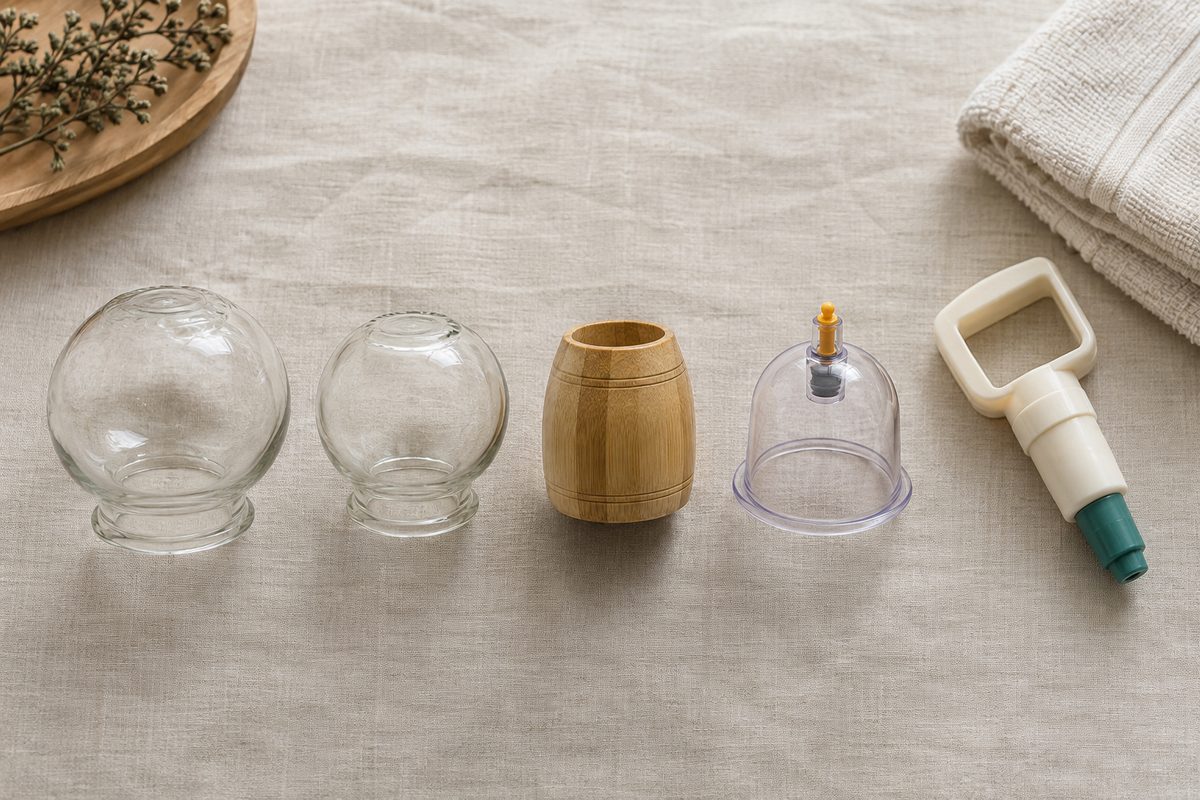
Where it sits first. Cupping belongs to the broad "acupuncture therapies" group — the Hong Kong regulator says acupuncture therapy includes needling, moxibustion, cupping and others. Cupping itself does not use needles; only method ④ below is the exception.
Cupping (拔罐法) is defined as a therapeutic method to create negative pressure by consuming the air inside the cup with fire or other methods and then place the cup on the skin over the selected area — that is how the World Health Organization's 2022 standard terminology for TCM writes it.
"Negative pressure" is the standard's own term. The visible side of it is simple: a small patch of skin is drawn up into the cup.
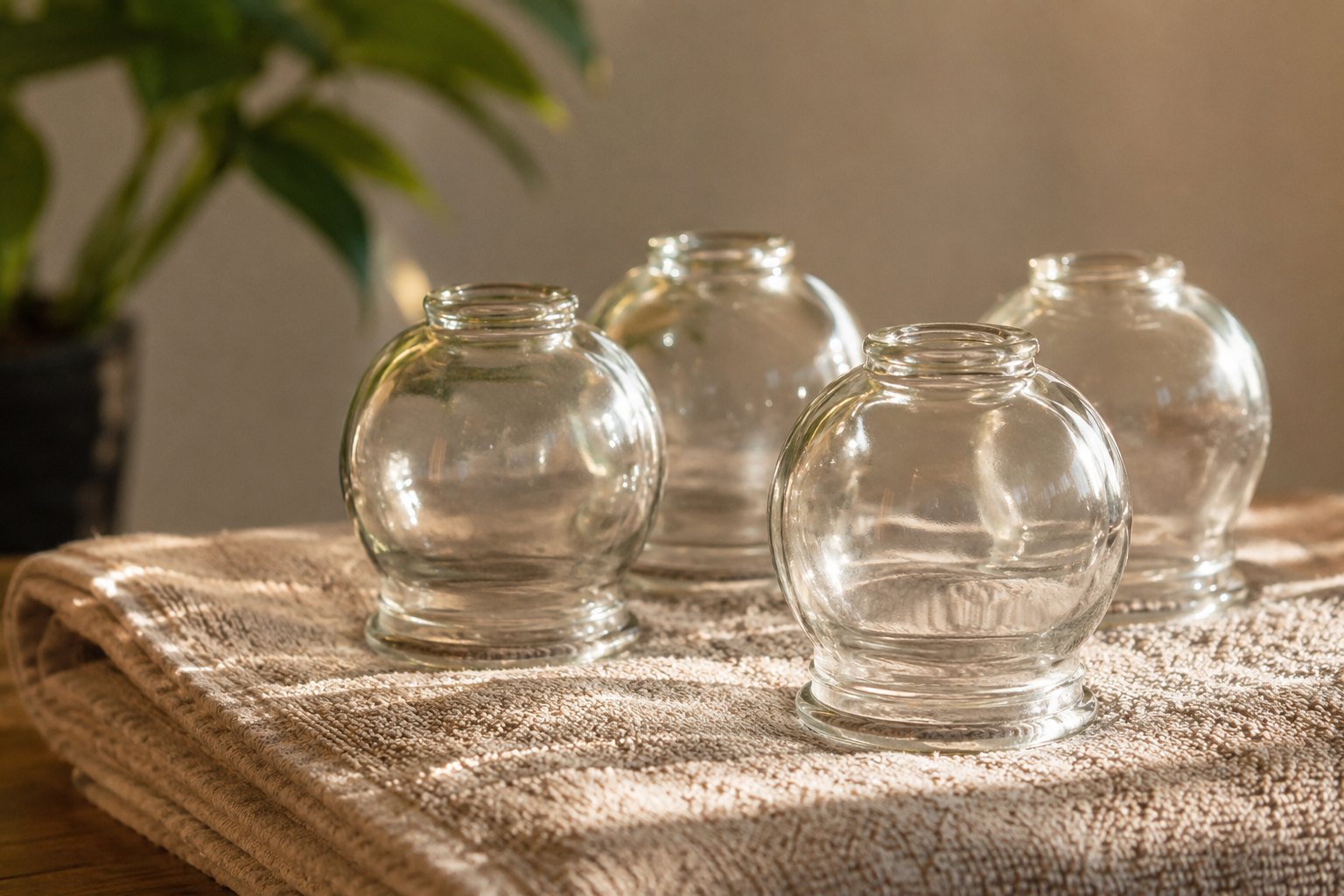
There is more than one kind of cup. China's national TCM administration's infection-control guideline says the cups in common use include glass, bamboo, ceramic and suction cups. The first three work with a flame; the suction cup works with a pump device that draws the air out, which is how the Taiwan folk-practice manual puts it, and which Cleveland Clinic calls the more modern approach.
💡 Remember: cupping generally involves no needles. If your practitioner mentions "wet cupping" (刺络拔罐), that method does break the skin — ask about it beforehand.
II. The four common methods
The four methods the same Hong Kong page lists — this is how each one works:
- ① Fire cupping (火罐法): some of the air inside the cup is driven out with a flame, and the cup grips the skin. The WHO standard's wording: an ignited material is introduced inside the cup to consume the air, enabling the cup to suck itself onto the skin. The traditional method Cleveland Clinic describes is setting an alcohol-soaked cotton ball alight inside the cup; the same page's account is that the heat sends oxygen out of the cup, creating a vacuum, and the vacuum force pulls the skin up into the cup.
- ② Flash cupping (闪罐): the cup is attached and immediately removed, then attached again, repeatedly, until the skin flushes. That is the operation written in the Taiwan Ministry of Health and Welfare's operating manual for the non-medical cupping trade (suction cups).
- ③ Sliding cupping (走罐): lubricant is applied first, then the attached cup is pushed and pulled back and forth along a set path — the same manual's wording.
- ④ Wet cupping (刺络拔罐): a needle lightly punctures the skin before the cup goes on — that is Cleveland Clinic's description. This one draws blood; it breaks the skin.
One more method is the one most often simply called "cupping", and its name is not among those four: cup retention (留罐) — leave the cup in place after suction, which is the whole of the WHO standard's definition. How cup retention, sliding cupping and wet cupping actually differ, and what each requires, is where part 3 sets them side by side.
💡 Remember: of the four methods, the one that breaks the skin is wet cupping.
III. What TCM theory says, and what physically happens in the skin
These two get run together, and they answer different questions.
What TCM theory says. In TCM theory, cupping works through the stimulus of negative pressure, bringing blood to the local skin and causing local stasis — that is how the Hong Kong regulator's page puts it. The same page says the theoretical action of the acupuncture-therapy group as a whole is to harmonise the organs, clear the meridians, and regulate qi and blood.
What physically happens in the skin. Cleveland Clinic puts it directly: the suction breaks open tiny blood vessels under the skin, and that is what leaves the mark. A "cupping mark" (罐印) is the ring left on the skin afterwards — it is blood under the skin, and the skin itself is not broken; the colour and how long it lasts are in part 4.
The two accounts answer different questions — one is about the theoretical action, the other about what physically happens in the skin. This article keeps them apart, and does not use the first as an explanation of the second.
For the difference between needling and cupping, see What Is Acupuncture (/what-is-acupuncture/).
The words in this part
All four come from the sources quoted above.
- Cupping (拔罐法) — a therapeutic method that creates negative pressure by consuming the air inside the cup with fire or other methods and then places the cup on the skin over the selected area. That is the WHO's standard terminology for TCM. You will see the word in a clinic's list of services.
- Fire cupping (火罐法) — an ignited material is introduced inside the cup to consume the air, enabling the cup to suck itself onto the skin. The same standard's definition.
- Wet cupping (刺络拔罐) — prick the area to be treated with a three-edged needle or lancet, then suck out blood with a cup. The same standard's definition. Of the four methods, this is the one that breaks the skin.
- Suction cup (抽气罐) — a cup whose air is drawn out by a pump device. That is how the Taiwan folk-practice manual writes it; Cleveland Clinic calls it the more modern approach. No flame is involved.
Frequently asked
Does cupping use needles? Generally no. The Hong Kong regulator lists cupping alongside needling and moxibustion in the broad "acupuncture therapies" group, but cupping itself does not rely on a needle. Of the four methods, the one that uses a needle is wet cupping — the skin is pricked, then the cup goes on, and there is blood. If your practitioner mentions this one, ask about it beforehand (part 3).
Glass, bamboo, suction — what is the difference? China's national TCM administration's infection-control guideline lists glass, bamboo, ceramic and suction cups as the cups in common use. The clearest difference is that the first three work with a flame and the suction cup works with a pump device. The hygiene requirements also change with the method — also part 3.
Do not: treat the depth of a mark as a gauge of how well or unwell you are (part 4).
The other five parts
- Part 2: What actually happens in one session: minutes, cups, and what it feels like
- Part 3: Cup retention, sliding cupping and wet cupping: what actually differs, and what each requires
- Part 4: The marks: what they are, why they fade, and how long they last
- Part 5: Situations to tell your practitioner about first, or to see a doctor about first
- Part 6: Aftercare: showering, air-conditioning, and the day after
👉 If you are unsure whether cupping is suitable for your situation, you are welcome to book an online consultation with HansMed, where a practitioner registered under the T&CM Act 2016 can assess it with you. Cupping is an in-person procedure; the in-person service is coming soon.
Sit with a licensed TCM practitioner from wherever you are.
HansMed Modern TCM
For general wellness education only — not medical advice. Consult a registered TCM practitioner for personal guidance.
Sources
- World Health Organization, WHO international standard terminologies on traditional Chinese medicine, 2022 — https://www.who.int/publications/i/item/9789240042322
- Hong Kong Department of Health, Chinese Medicine Regulatory Office, Common Chinese Medicine Therapies — https://www.cmro.gov.hk/html/gb/useful_information/public_health/pamphlet/Health_35780_Booklet_r3.html
- Taiwan Ministry of Health and Welfare, Department of Chinese Medicine and Pharmacy, operating manual for guasha and cupping in the folk-conditioning trade, page updated 18 December 2025 — https://dep.mohw.gov.tw/docmap/cp-4389-39605-108.html
- Cleveland Clinic, Cupping Therapy: Definition, Types & Benefits, last updated 06/07/2023 — https://my.clevelandclinic.org/health/treatments/16554-cupping
- National Administration of Traditional Chinese Medicine and National Health and Family Planning Commission (China), Guideline for the prevention and control of infection related to TCM medical techniques (trial) — http://www.natcm.gov.cn/bangongshi/zhengcewenjian/2018-03-24/838.html